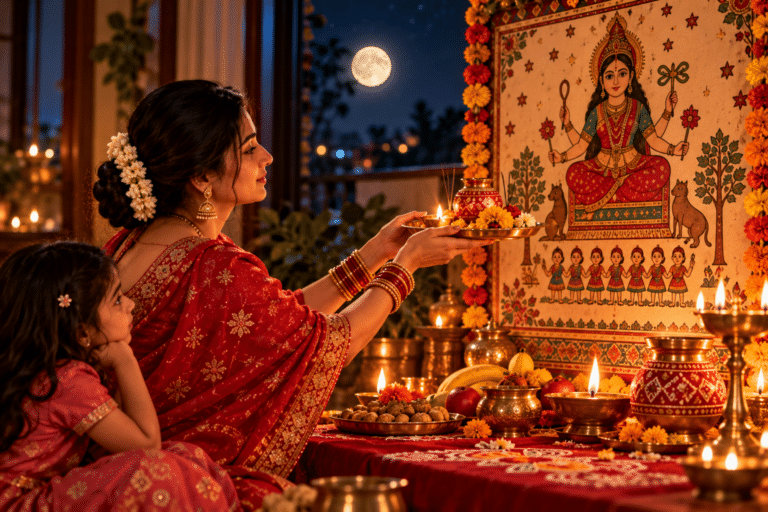
Ahoi Ashtami 2026: A mother’s love is often expressed through the smallest gestures. Sometimes, it’s preparing a favourite meal. Other times, it’s staying awake until her child returns home safely.
And then there’s Ahoi Ashtami, a beautiful Hindu tradition where mothers observe a fast and pray for their children’s happiness, health, and long life.
But why is this vrat considered so special? And what’s the story behind worshipping Ahoi Mata?
Let’s explore the date, rituals, and deeper meaning of Ahoi Ashtami 2026.
Quick Glance: Ahoi Ashtami 2026
- Date: Sunday, November 1, 2026
- Ashtami Tithi Begins: November 1 at 2:51 PM
- Ashtami Tithi Ends: November 2 at 1:10 PM
- Puja Muhurat: 5:36 PM to 6:54 PM
- Star-Sighting Time: Approximately 6:00 PM
- Moonrise: 11:40 PM
- Worshipped Deity: Ahoi Mata
Timings are for New Delhi, according to Drik Panchang.
When Is Ahoi Ashtami 2026?
Ahoi Ashtami will be observed on Sunday, November 1, 2026.
According to the North Indian Hindu calendar, the festival falls on Krishna Paksha Ashtami of Kartik month, approximately eight days before Diwali.
Celebrated mainly across North India, this vrat is traditionally observed by mothers seeking divine blessings for their children’s well-being.
Why Do Mothers Observe Ahoi Ashtami Vrat?
Traditionally, mothers observe Ahoi Ashtami to pray for their children’s protection, happiness, and longevity.
While older customs often focused on sons, many families today observe the vrat for both daughters and sons.
The festival celebrates motherhood, unconditional love, and the deep emotional connection between parents and children.
Interestingly, the vrat also encourages gratitude, compassion, and responsibility towards every living being.
What Is the Story Behind Ahoi Ashtami?
According to a popular Ahoi Ashtami Vrat Katha, a mother accidentally harmed a young porcupine while digging soil.
Following this incident, she experienced great sorrow involving her children.
Filled with regret, she prayed sincerely to Ahoi Mata and sought forgiveness. According to the traditional story, her devotion eventually brought blessings and happiness back into her family.
The story symbolically teaches compassion, repentance, and the importance of protecting innocent lives.
How to Perform Ahoi Ashtami Puja Vidhi at Home?
The rituals are simple, although traditions may vary between families.
- Wake up early, bathe, and take a vrat sankalp.
- Clean the prayer space and place a picture of Ahoi Mata.
- Prepare offerings such as roli, rice, flowers, fruits, and sweets.
- During the evening Puja Muhurat, light a diya and worship Ahoi Mata.
- Listen to or recite the traditional Ahoi Ashtami Vrat Katha.
- Offer water to the stars after they become visible.
- Break the fast according to family customs.
Some families traditionally wait until moonrise before completing their fast.
Why Are Stars Worshipped on Ahoi Ashtami?
One of the most beautiful traditions of Ahoi Ashtami is offering Arghya to the stars.
In Hindu traditions, stars are often associated with divine guidance and continuity.
For mothers observing this vrat, star worship symbolises their prayers for their children’s long, peaceful, and prosperous lives.
Ultimately, Ahoi Ashtami reminds us that motherhood is not just about protection. It’s also about patience, sacrifice, and unconditional love.
Want to explore auspicious Puja timings, traditional rituals, and personalised spiritual guidance?
Check Tithi Guide and Ask Agastyaa on AstroSure!
ALSO READ: Karwa Chauth 2026: Why Is the Moon Worshipped and What Is Its Astrological Significance?
FAQs About Ahoi Ashtami 2026
1. When is Ahoi Ashtami in 2026?
Ahoi Ashtami falls on Sunday, November 1, 2026.
2. Why do mothers observe Ahoi Ashtami?
Mothers traditionally fast and worship Ahoi Mata for their children’s health, happiness, and longevity.
3. What is the Ahoi Ashtami Puja Muhurat in 2026?
In New Delhi, the auspicious Puja Muhurat is from 5:36 PM to 6:54 PM.
4. When is Ahoi Ashtami fasting completed?
Many devotees break their fast after sighting the stars, while some families traditionally wait for moonrise.